Research
Fields: Political Economy · Economic Development · Economic History
job market paper
Job Market PaperEHS New Researcher Prize Land Without Masters: Local Political Effects of Peru's Land Reform Abstract
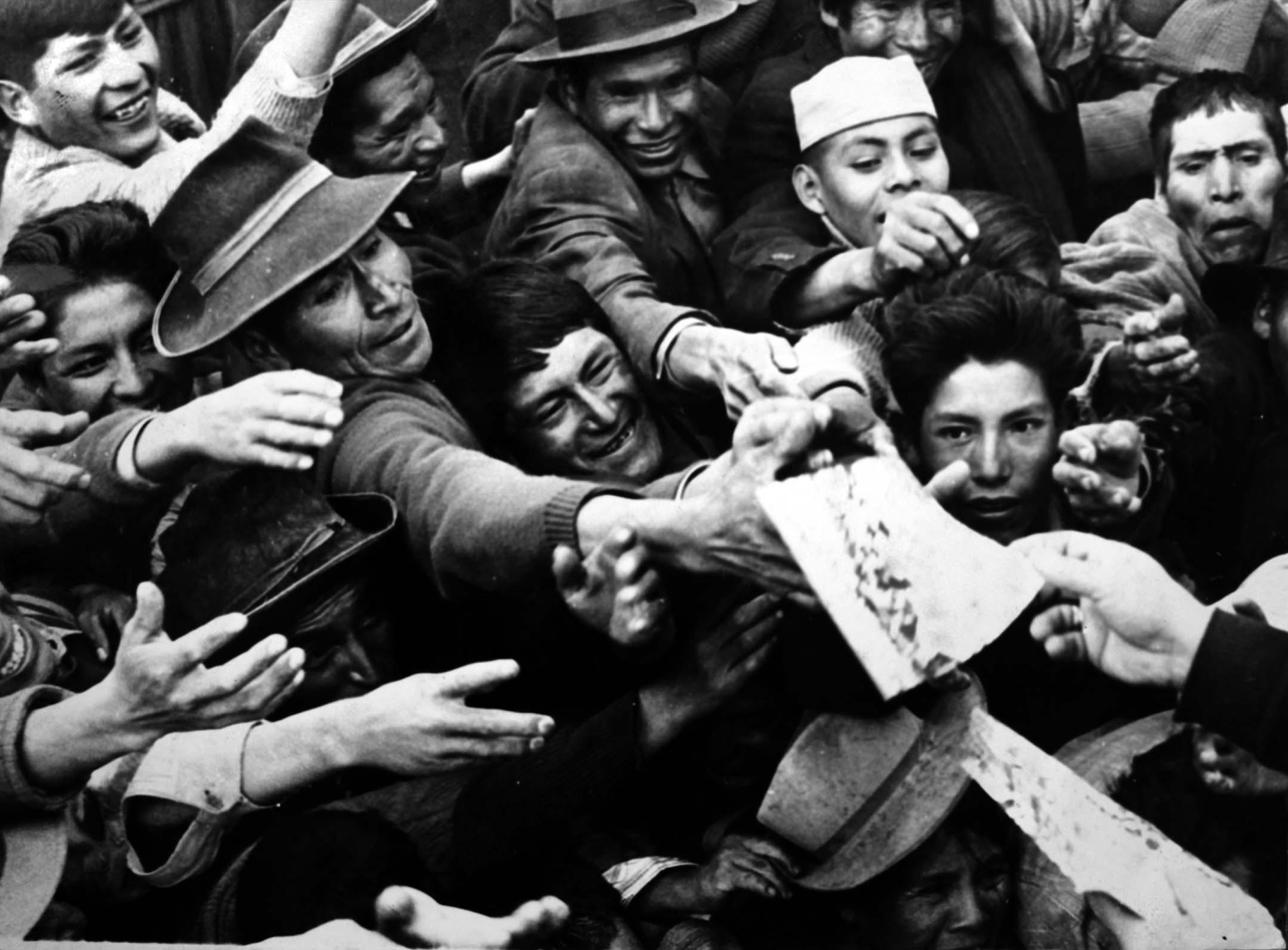
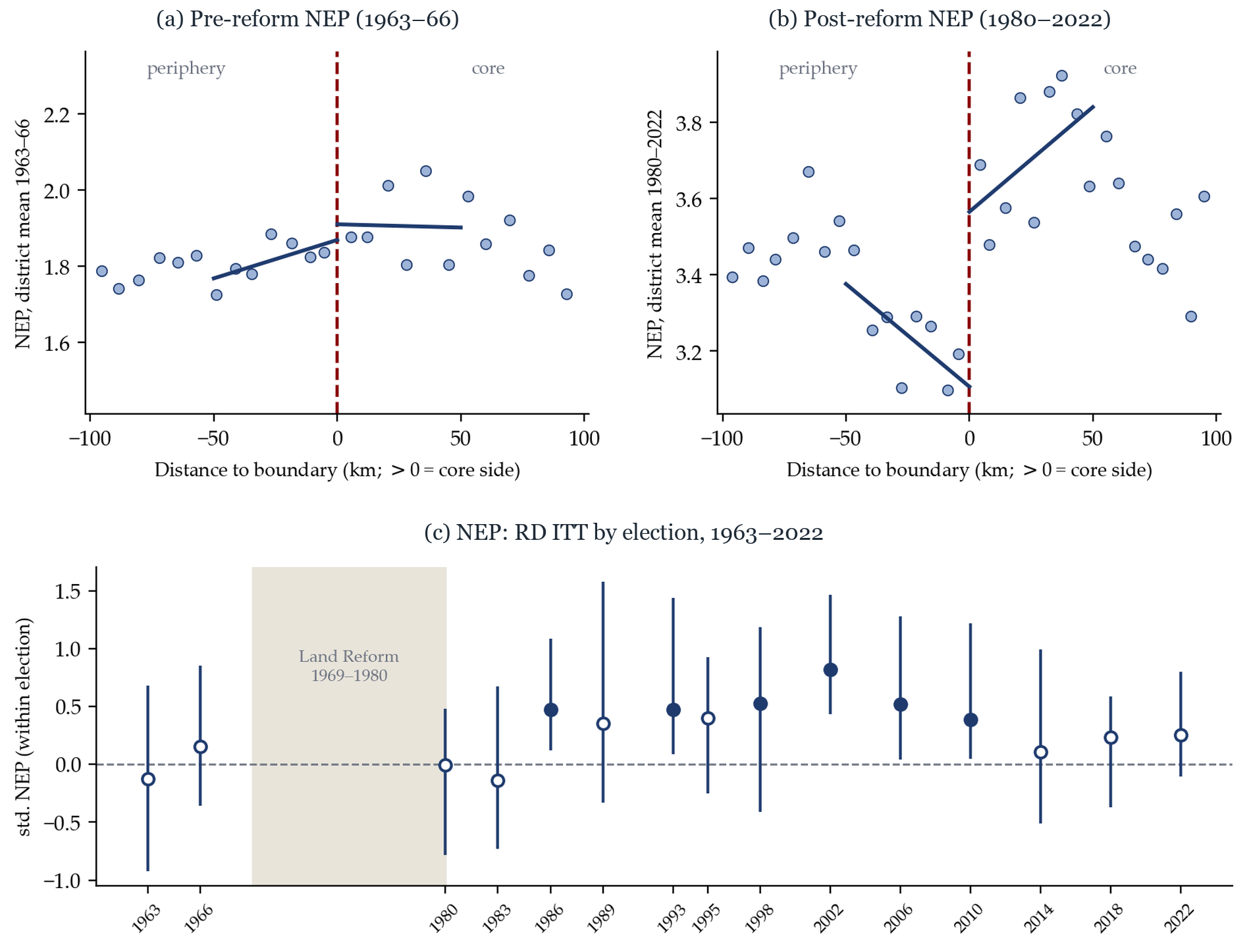
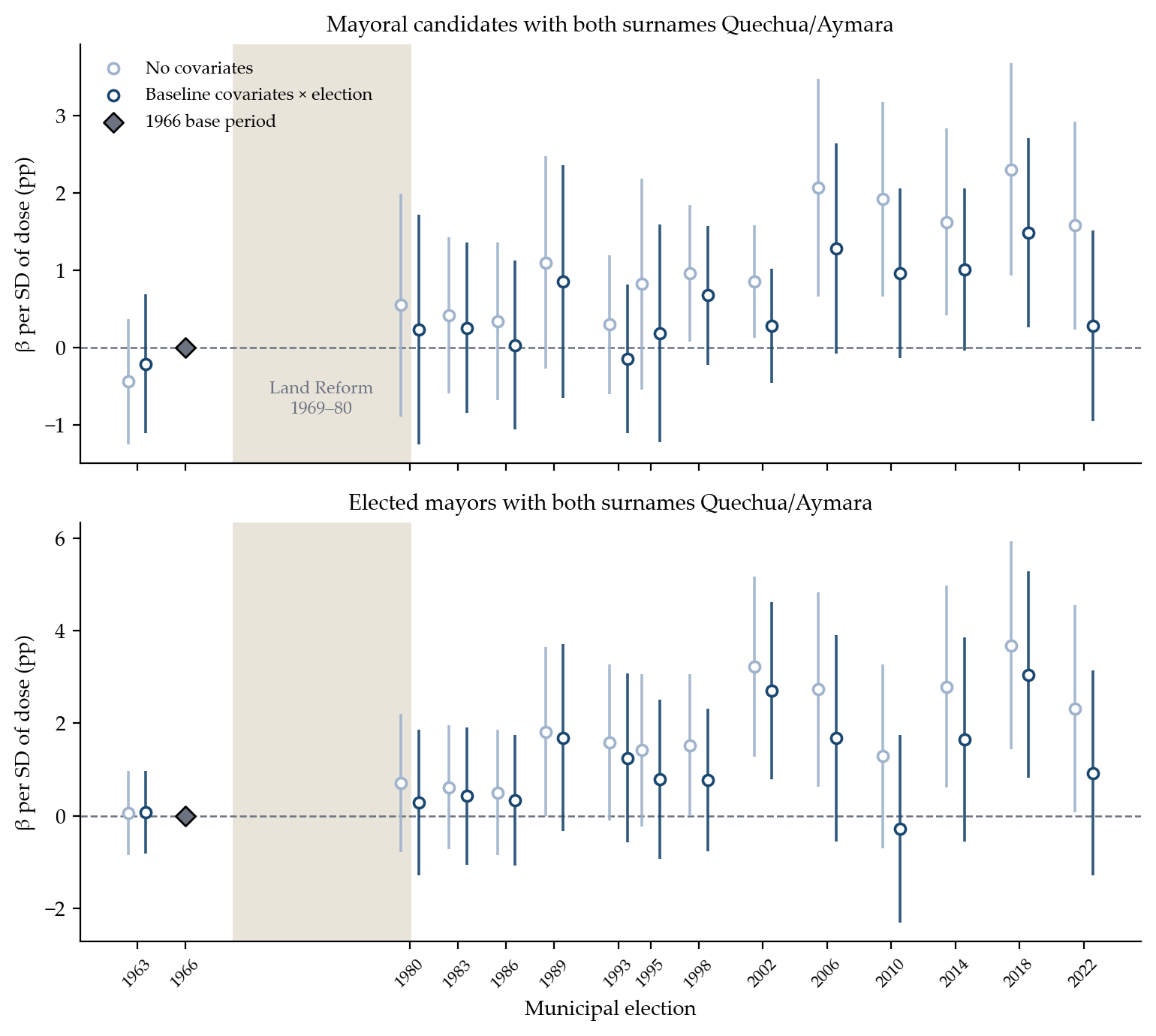
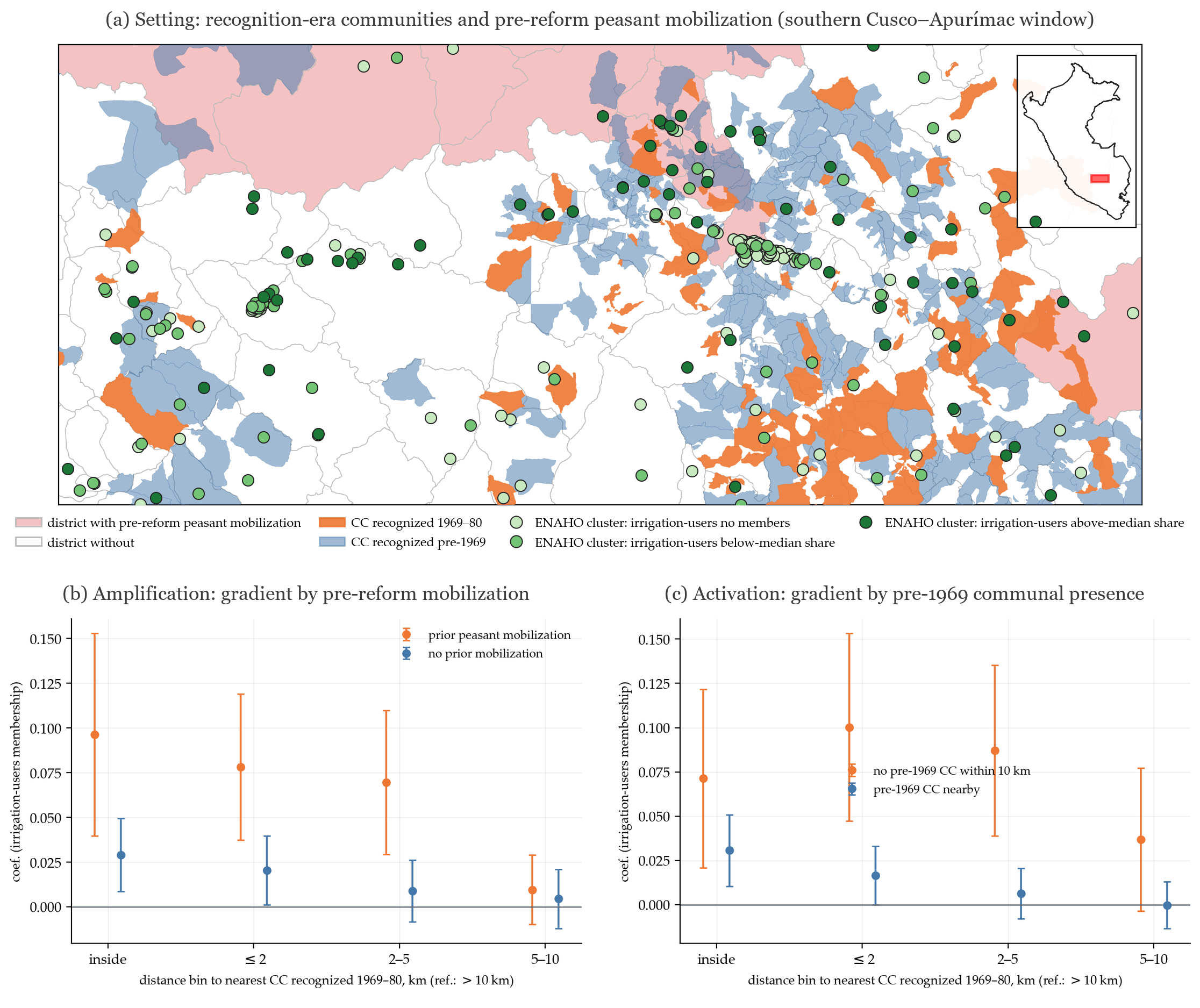
Can redistribution reshape political power? This study examines the large-scale land expropriation carried out under military rule in Peru between 1969 and 1980 and its long-run effects on local politics after the return to democracy. Identification exploits the reform's administrative geography: Agrarian Reform Zones (ARZ) and their regional offices were drawn up for entirely different purposes a decade before expropriations began. I combine proximity to ARZ offices, discontinuities at within-ARZ borders, and district-by-election variation to estimate the causal effects of the reform on political competition, electoral participation and candidate selection. The reform persistently increased local political competition, raising the number of parties contesting local elections and the entry of previously excluded candidates. To interpret these findings, I extend a model in which landlords' labor-market power translates into electoral control. Expropriation weakens that control and opens entry, but released voters gain political weight only where they are organized. Nonparametric mediation tests support this reading. Organized producers and early left voting can each account for the entire effect on the number of parties, while turnout responds only where the exit of incumbent elites combines with local organization. The economic changes the reform set off cannot fully explain either response.
JEL: P16, N46, Q15, D72
JEL: P16, N46, Q15, D72
working papers
Haciendas, Landed Elites and the Making of Human Capital in the 20th-Century Abstract
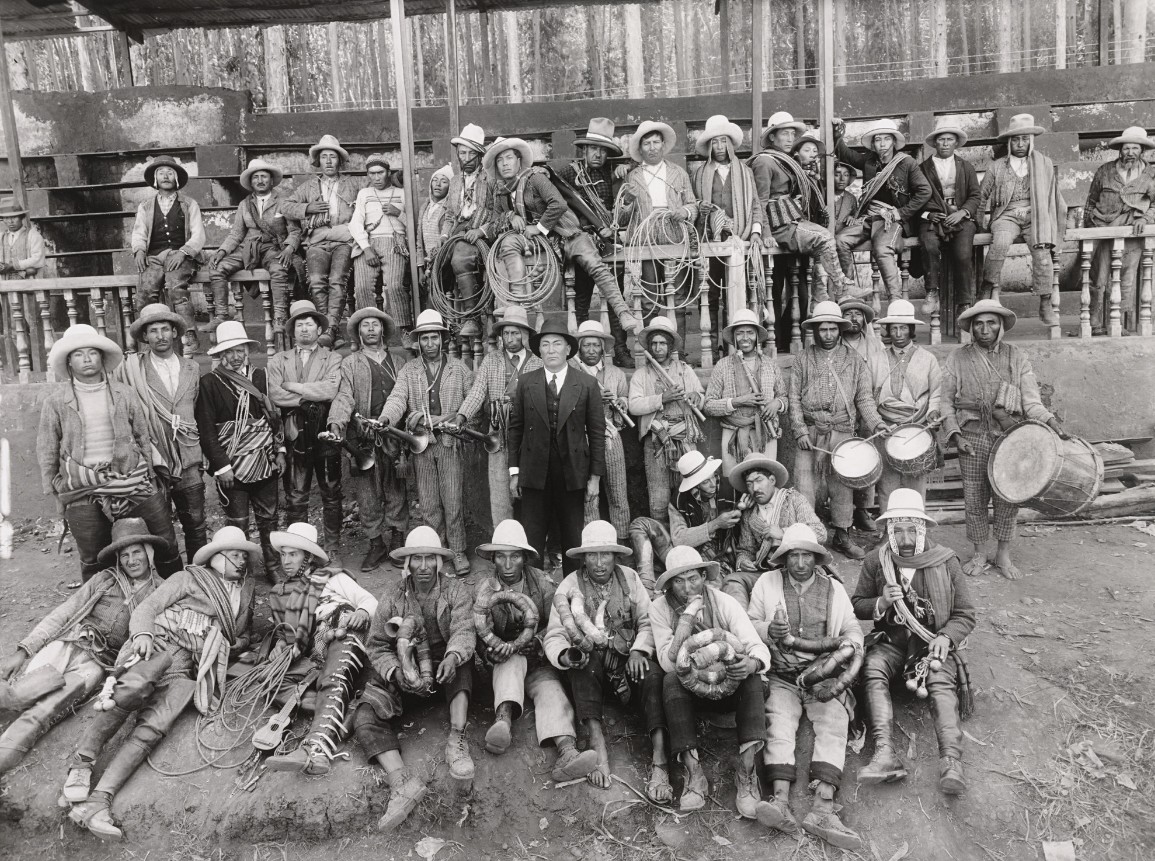
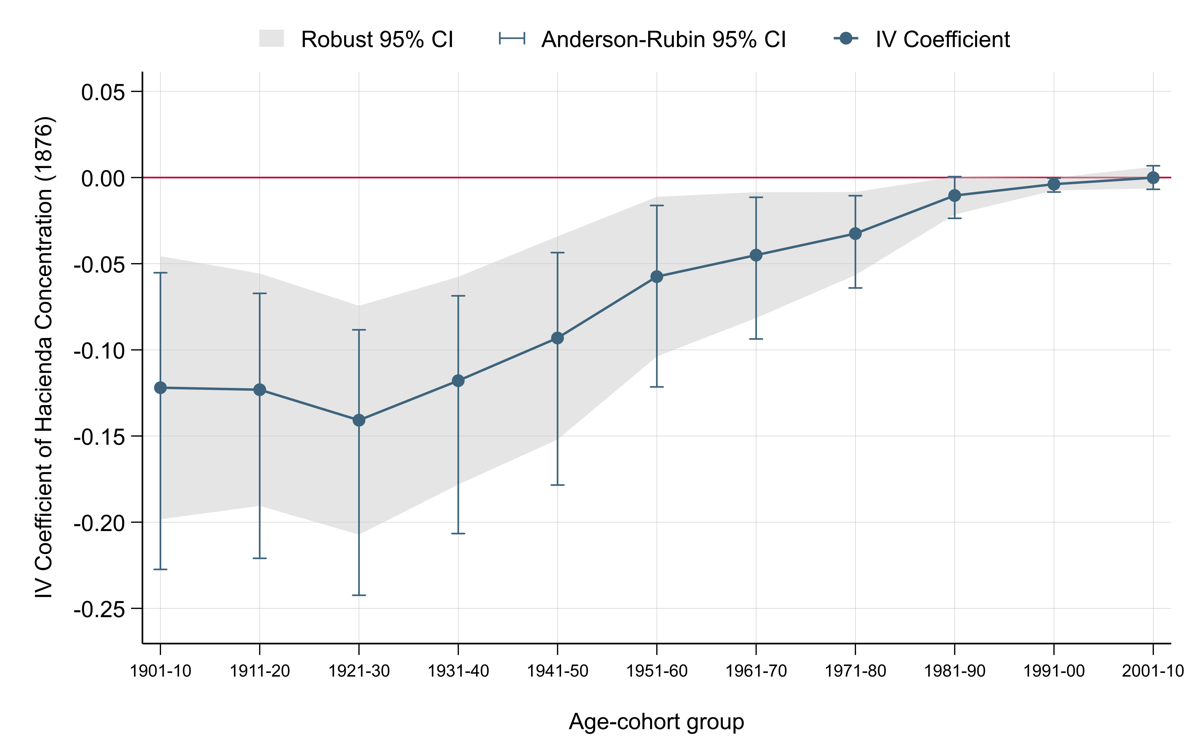
Can landed elites prevent mass education? If so, under what conditions? This article examines the long-term human capital impacts of the Spanish hacienda, the predominant system of agrarian estates with coerced labor granted to local elites during the colonial era in Latin America. Using original district-level data on the placement of haciendas in Peru since 1876 and over a century of population census records, we exploit variation in hacienda crop-suitable areas, age cohorts, and predetermined elite family connections to show that hacienda prevalence persistently reduced literacy rates throughout the 20th century. Consistent with a supply-side mechanism, exposed districts received lower investments in schools and teachers, without comparable reductions in other public goods, and exhibited negligible impacts on demand-side proxies such as local economic activity, agricultural specialization, or broader development outcomes. Moving beyond explanations centered on early market integration or public-goods provision, we show that a larger share of workers in haciendas explains long-term human capital losses even among regions with comparable structural conditions. This effect was strongest where labor control was concentrated in fewer haciendas, allowing landed elites to block schooling investments. Because voting required Spanish literacy, limited schooling in exposed areas translated into persistently lower Indigenous political participation. Although industrialization, urbanization, and top-down land redistribution later emerged, they failed to reverse the human capital deficits entrenched by the hacienda system.
Long-Term Effects of a Commodity Boom: Rubber Slavery in the Amazon Abstract
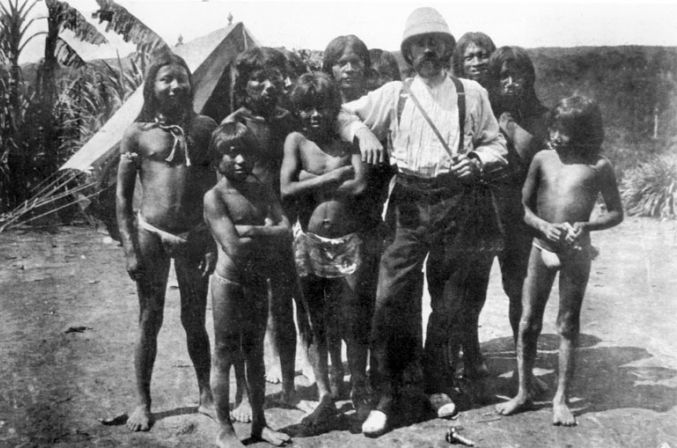
Can a brief period of economic prosperity leave a legacy of long-term adversity? This study examines the lasting impact of the Amazon rubber boom around 1900 on contemporary income, inequality, Indigenous presence, and forest conservation. Identification combines variation in historical rubber distribution with an instrumental variable strategy using FAO-based rubber suitability and a Regression Discontinuity design around concession boundaries. Municipalities with greater rubber presence experienced short-term gains in 1920 but long-run reversals by 2010, showing lower income, population density, and higher inequality and Indigenous extinction. Grid-level analyses across the Amazon further show that historical rubber suitability is associated with weaker economic activity and population today, alongside greater deforestation. The findings, consistent across Brazil, Colombia, Peru, and Bolivia, indicate that the rubber boom's short-lived wealth reinforced extractive institutions and violence against Indigenous peoples, leaving long-lasting economic, social, and environmental scars across the Amazon.
work in progress
- Strategic Elites: Power Recomposition after Expropriation
- Transferable Land Rights and Agricultural Productivity in Vietnam under Doi Moi
- Count Them Well: The Political Economy of Missing Persons
- A World Where Many Worlds Fit? Autonomous Governance and Development in Chiapas
- An Unlikely Shield: Informal Settlements and Political Violence in Peru
book chapters
- Perspectives on The Agricultural Wealth of Nations
- Land and Power: Long-Run Economic and Political Legacies in Peru
academic service
Referee · Journal of Development Economics · Environment and Development Economics
Invited comments and rapporteur work · Handbook of Culture and Economic Behavior (eds. Enke, Giuliano, Nunn & Wantchekon; forthcoming) · The Wealth of Nations at 250 (rapporteur; conference volume, Cambridge University Press, forthcoming)
Seminar organization · Development Economics Seminar, Paris School of Economics